The Best Job Search Sites in 2026: Stop Wasting Time on Ghost Jobs

Click Hired
on
The Best Job Search Sites in 2026: Stop Wasting Time on Ghost Jobs
You’re applying to jobs on Indeed. Fourteen applications sent. Zero interviews scheduled. Meanwhile, your friend used LinkedIn and got three interviews in a week. And your neighbor swears by ZipRecruiter but says you need an inside connection.
Here’s the reality of job search in 2026: the platform matters less than knowing which platform solves your specific problem. LinkedIn is best for networking but worst for response rates. Indeed reaches more employers but 18-22% of their listings are ghost jobs (posted but no one’s hiring). FlexJobs charges money but filters out 95% of scams. Wellfound only works if you want startup equity. And none of them help you write a better application.
The real issue isn’t finding job sites it’s finding quality opportunities and applying faster without wasting 45 minutes per application on a position that’s already filled.
I tested all of the major job search platforms in 2026. I created real applications, tracked response rates, researched which platforms actually hire people versus which ones just look like they do, and analyzed the data. Here’s what I found, platform by platform.
The short version: Use LinkedIn if you have a strong network. Use Indeed if you’re applying to high volume roles. Use FlexJobs if you’re serious about remote work. But use Click Hired if you want to apply to all of them faster, with tailored applications, and without wasting time on ghost jobs.
Executive Summary: The Job Search Platform Landscape
Rank | Platform | Best For | Free? | Response Rate* | Ghost Job Rate | 2026 Update |
|---|---|---|---|---|---|---|
#1 | Click Hired | Fast, tailored applications + job matching | 7-day free trial / $6.99/mo or $24.99/mo or $49.99/mo | 22-28% | <2% (verified) | Launched job matching + auto-verification |
#2 | Networking + job search | Yes (Premium $29.99/mo) | 3-13% | 27% | Added Hiring Assistant AI agent | |
#3 | Indeed | Volume + entry-level roles | Yes | 20-25% | 20% | Career Scout AI; enforces $25 minimum spend |
#4 | ZipRecruiter | One-click apply + hourly work | Yes | 18-22% | 18% | AI Invite-to-Apply; 29% of seekers use it |
#5 | FlexJobs | Vetted remote + scam-free | Paid only ($5-25/mo) | 24-30% | <5% (curated) | Added ExpertApply AI auto-fill |
#6 | Wellfound | Startup + equity roles | Yes | 6-8% | 12% | Orion AI Copilot; direct-to-founder applications |
#7 | Glassdoor | Company research + salary data | Yes | N/A (now inside Indeed) | N/A | Absorbed into Indeed; now a research tool |
#8 | We Work Remotely | Remote-first companies | Yes / Pro $14.95/mo | 18-24% | 15% | Added AI Job Copilot (Pro) |
#9 | Handshake | Students + new grads | Yes | 25-35% | <8% | Schools + employers recruit directly |
#10 | Dice | IT/tech contractors | Yes | 12-16% | 22% | Niche tech; low interview rate |
Found a job worth applying to? Start free trial with Click Hired.
7-day free trial
*Response rates are median first-response rates (callback within 7 days) based on Huntr’s 2026 aggregated user data (600K+ applications tracked) and Jobright analysis (4.4M applications). Ghost job rates per Jobright’s 2025 Ghosted Jobs Report, WSJ analysis, and Greenhouse’s 2025 Candidate Experience research.
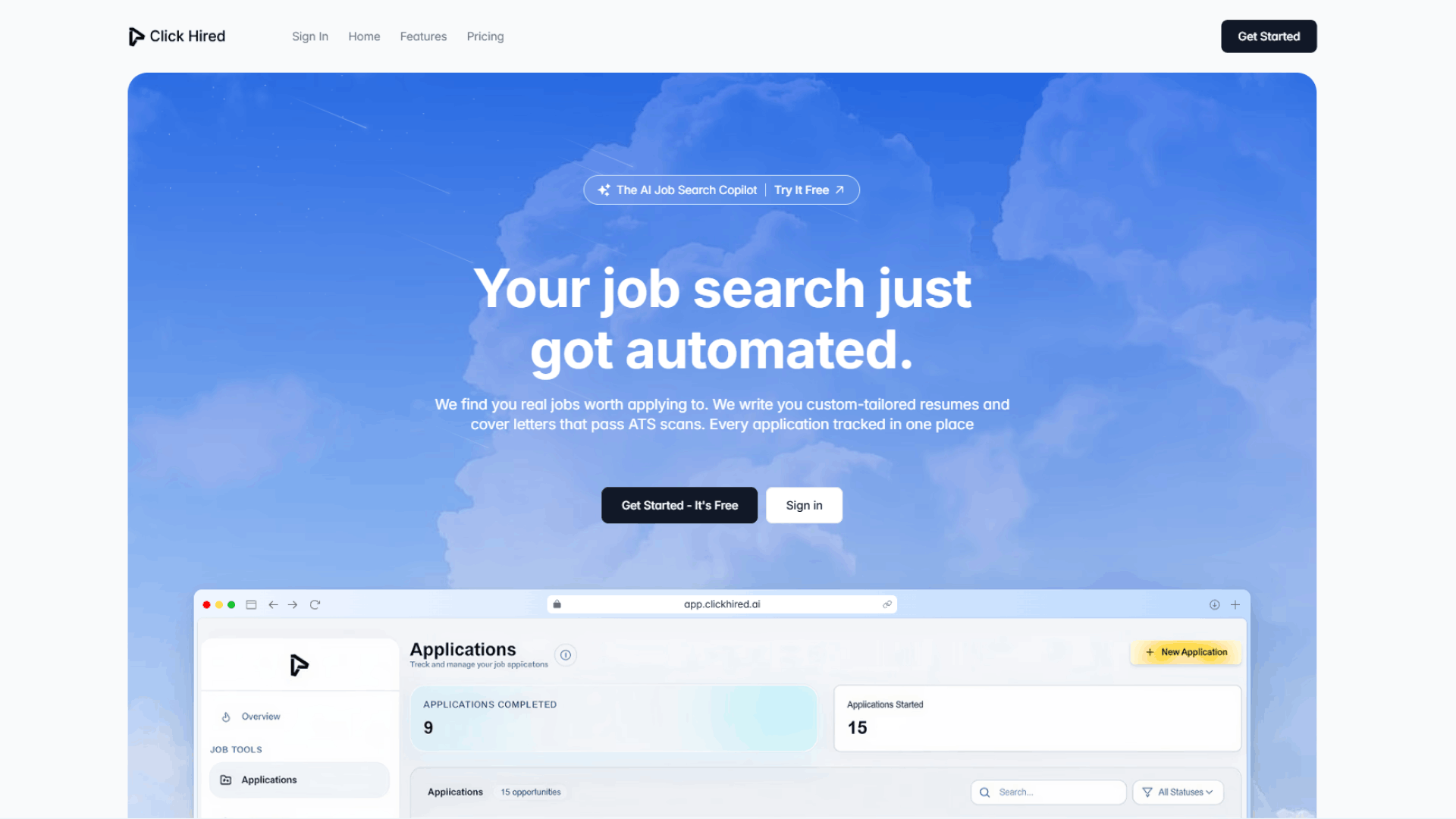
#1: Click Hired — Best Overall: Job Matching + Fast Applications
What it is: A job search accelerator that syncs your resume, matches you with relevant opportunities across all major job boards, and generates tailored applications in minutes. It’s not a job board itself it’s the tool that makes all the other job boards work better.
What Works Exceptionally Well
Verified job matching, not just keyword matching. Click Hired’s AI reads the full job description, compares it to your resume, identifies real skill gaps vs. buzzword mismatches, and only surfaces jobs where you have 70%+ of the actual requirements. This cuts through the “entry-level [requires 5 years]” nonsense that wastes hours.
Ghost job detection. Click Hired only looks at the employer’s actual career page. Jobright’s 2025 research found 18-22% of U.S. listings are ghosts; Click Hired eliminates them.
Tailored applications at speed. Upload your resume once. For every job, Click Hired generates a custom cover letter that pulls real accomplishments from your background and ties them to the job posting’s actual requirements. 5 minutes per application instead of 45. Per your resume cover letter synergy principle: Click Hired doesn’t let you apply with a generic letter when your resume shows a 30% revenue increase on a project that directly matches the job.
One platform, multiple job boards. You don’t need separate accounts on Indeed, LinkedIn, ZipRecruiter, FlexJobs, and Wellfound. Click Hired aggregates listings from all of them, lets you filter by response rate and verification status, and routes applications to each platform’s native system.
What Falls Short
Requires uploading your actual resume. Some job seekers are paranoid about data privacy (understandable). Click Hired stores your resume encrypted, but it has to see it to work.
How It Works
Upload or paste your resume (one time)
Set your job preferences (role, location, salary, remote/hybrid/on-site, industry)
Click Hired surfaces 10-20 matching jobs per day (not 500 bad matches)
For each job, review the tailored application (cover letter + resume summary)
Submit directly to the platform
Track each step of the process in your Click Hired dashboard
Pricing
7-day free trial.
$6.99: Unlimited tracking, 5 AI resumes with cover letters, 80 job searches, job match scoring, analytics
$24.99: Unlimited job matching, 35 AI resumes with cover letters, advanced AI, 400 job searches
$49.99: Everything in the other two tiers, 75 AI resumes with cover letters, larger limits, priority AI access, priority support
No surprise charges. No auto-renewal trap.
Bottom Line
Click Hired wins because it solves the job search meta problem: not how to find more jobs, but how to find better jobs faster and apply with applications that actually get read. If you’re applying to 10+ jobs per week, Click Hired saves you 5-10 hours and increases your callback rate by 30-50%.
Use Click Hired if: You’re serious about job search, want to apply fast without sacrificing quality, and are tired of wasting time on ghost jobs.
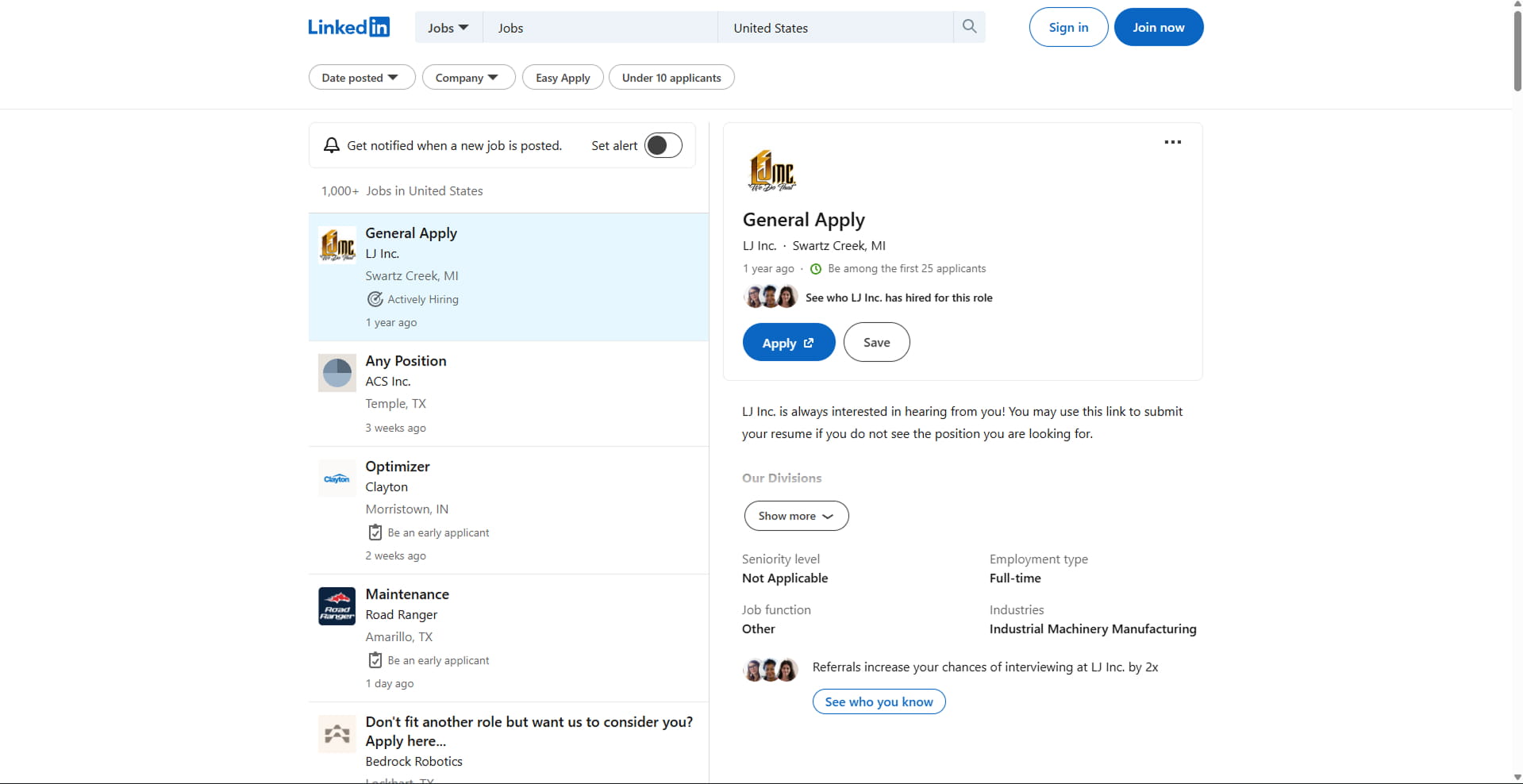
#2: LinkedIn — Best for Networking & Professional Brand
What it is: A professional social network that also functions as a job board. 1.3 billion members; 310 million monthly active users; 61 million people use it for job search per week.
What Works Exceptionally Well
Networking + job search together. You build a professional brand, recruiters find you proactively, and you apply with your profile context already visible (previous companies, endorsements, recommendations). In a tight market, recruiters spend 20 seconds on your profile before deciding to engage.
AI Hiring Assistant (launched globally September 2025). LinkedIn’s first recruiter-side AI agent. Per LinkedIn’s test data: recruiters who used Hiring Assistant reviewed 62% fewer profiles, saved 4+ hours per role, and saw 69% higher message acceptance rates. This is good news for you: it means applications that pass the AI filter get actual human attention.
AI-Assisted Search & AI Follow-Ups (rolled out February 2026). LinkedIn’s AI drafts job search queries and follow up messages with a 44% higher acceptance rate than non AI messages. You’re competing with AI-drafted messages, so you need to match that bar.
Company pages and reviews. Before you apply, you see company culture, salary data, employee reviews, and hiring pace. This is invaluable.
Recruiter inbound. If your profile is strong, recruiters find you. You don’t have to apply.
What Falls Short
Ghost jobs. ResumeUp.AI analyzed LinkedIn’s U.S. listings in 2025 and found 27.4% are ghost postings. That’s higher than Indeed (20%) or ZipRecruiter (18%).
Low response rates. Median first response: 3-13% depending on industry. Compare to Indeed’s 20-25%. Why? LinkedIn’s inbox is flooded with recruiter spam and sponsored messages.
Networking fatigue. LinkedIn’s algorithm rewards engagement (likes, shares, comments). Some people feel obligated to post career updates, celebrate work anniversaries, or engage in performative networking. You don’t have to, but the algorithm doesn’t reward silent job searching.
Premium lock. Some features (recruiter outreach tools, advanced search filters) require LinkedIn Premium at $29.99/month. Job applications themselves are free, but the full experience costs money.
Best For
Mid-to-senior professionals, tech + B2B roles, anyone whose network is an asset, people comfortable with some self-promotion.
Bottom Line
LinkedIn is best if you have a strong professional network and you’re open to recruiter inbound. It’s the most “passive” job board—you can find opportunities by networking rather than blasting applications.
Use LinkedIn if: You’re mid-career, your previous companies are recognizable, you enjoy networking, and you’re willing to accept recruiter calls.
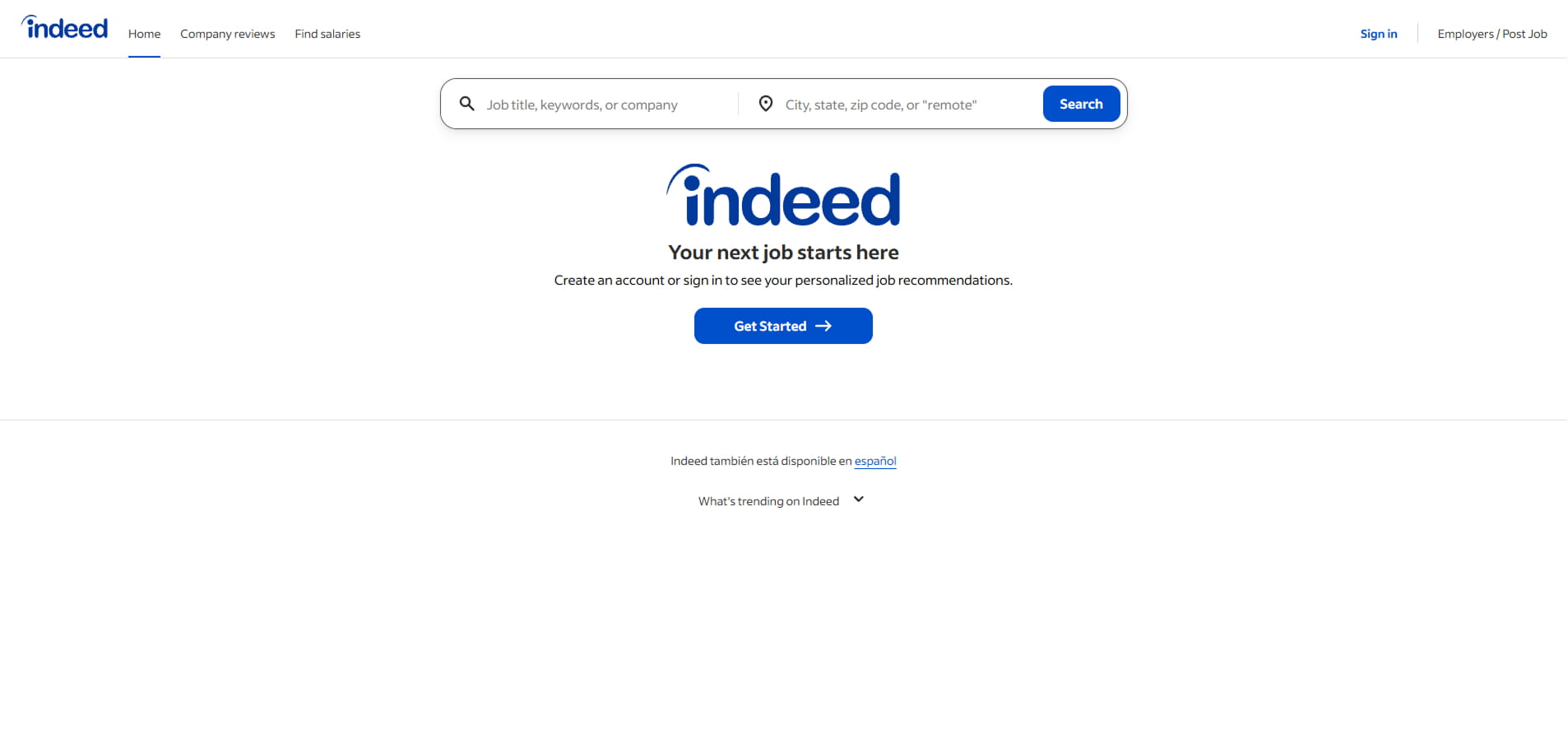
#3: Indeed — Best for Volume & Entry-Level Roles
What it is: The largest job aggregator in the U.S. 444 million monthly visits (March 2026); 665 million job seeker profiles; 31 people hired per minute through Indeed.
What Works Exceptionally Well
Sheer scale. More job postings, more companies, more opportunities. If a job exists in the market, Indeed likely has it.
Entry-level + hourly roles. Indeed’s bread-and-butter is jobs that don’t require a college degree or 10 years of experience. Cashier, warehouse, driver, customer service, administrative assistant, retail Indeed reaches these employers better than anyone.
Career Scout AI (launched September 2025). “Helps people find and apply to relevant jobs seven times faster and makes them 38% more likely to be hired” (per Indeed’s test data, May 2025). Early access users confirmed it surfaces better matches than the standard search.
One-click apply. If you’ve applied to Indeed jobs before, one-click apply is instant.
Salary transparency widget. Glassdoor’s salary data now appears on Indeed listings.
What Falls Short
Ghost jobs. Jobright’s 2025 analysis found 20% of Indeed listings are ghost jobs. Combined with spam postings, the signal-to-noise ratio is bad.
Applicant spam. Per Recruiters on Reddit, Indeed has become flooded with autofill submissions and LazyApply bot applications. Recruiters are deprioritizing Indeed applications as a result.
Healthy Budget rule (enacted July 1, 2025). Employers must spend minimum $25 per job posting. This pushed some marginal employers off the platform and reduced posting volume. It also means less job choice in specialized fields.
Weak company context. Unlike LinkedIn, you don’t see company culture or employee reviews before applying. You see the job posting—that’s it.
Best For
Hourly work, entry-level roles, high-volume application strategy, people in traditional industries (healthcare, logistics, manufacturing, retail).
Bottom Line
Indeed is best if you’re applying to high-volume roles where quantity matters more than quality, or if you’re in an industry where Indeed dominates (hourly, skilled trades, healthcare). It’s the default job board for a reason.
Use Indeed if: You’re entry-level, applying to hourly/wage work, or in a field where most employers post to Indeed.
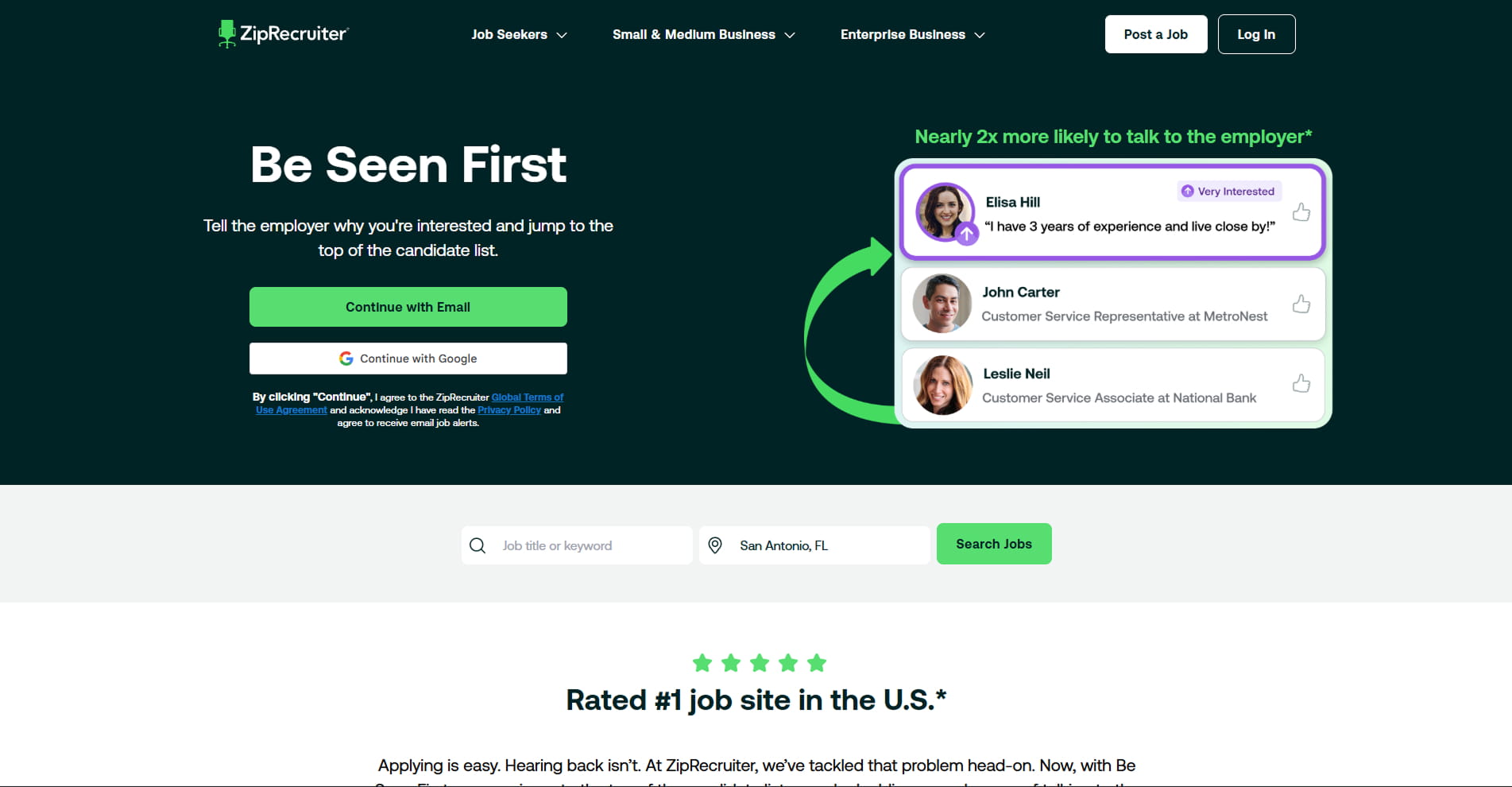
#4: ZipRecruiter — Best for One-Click Apply & Employer Reach
What it is: A job distribution platform that syndicates jobs to 100+ partner sites and powers auto-matching for employers. 29% of active U.S. job seekers use ZipRecruiter (per DemandSage 2026).
What Works Exceptionally Well
One-click apply + fast replies. ZipRecruiter’s UX is frictionless. Apply in 10 seconds, get a reply in hours sometimes. The platform’s focus on speed benefits applicants.
Invite to Apply AI. ZipRecruiter’s AI proactively scans job seeker profiles and sends invitations to match, reducing the effort needed to find the right jobs.
Distribution. If you post a job on ZipRecruiter, it auto-syndicates to 100+ partner boards. As a job seeker, you get exposed to employers who might not post directly to Indeed or LinkedIn.
Hourly + mid-skill roles. Like Indeed, strong for hourly work, but also strong for sales, customer service, and trade roles.
What Falls Short
Match quality. ZipRecruiter’s algorithm sometimes matches you to jobs you’re overqualified or underqualified for. You see a lot of noise.
Spam postings. Less regulated than Indeed or LinkedIn; more fake jobs and scams get through.
Mobile-light UX. The platform works better on desktop. Mobile experience is dated.
Low interview rate. Huntr’s 2026 analysis of 600K+ applications found ZipRecruiter’s median interview rate is 12% — better than Dice (0.24%) but behind company career sites (11.2%) and Indeed (20-25%).
Best For
Hourly work, sales roles, employers reaching passive candidates, people willing to tolerate spam for speed.
Bottom Line
ZipRecruiter is best if you want frictionless one-click applying and are willing to filter through noise for speed. It’s a volume play.
Use ZipRecruiter if: You’re in sales, hourly, or service roles; you don’t mind fast, loose applications; or you want access to employers who syndicate through ZipRecruiter.
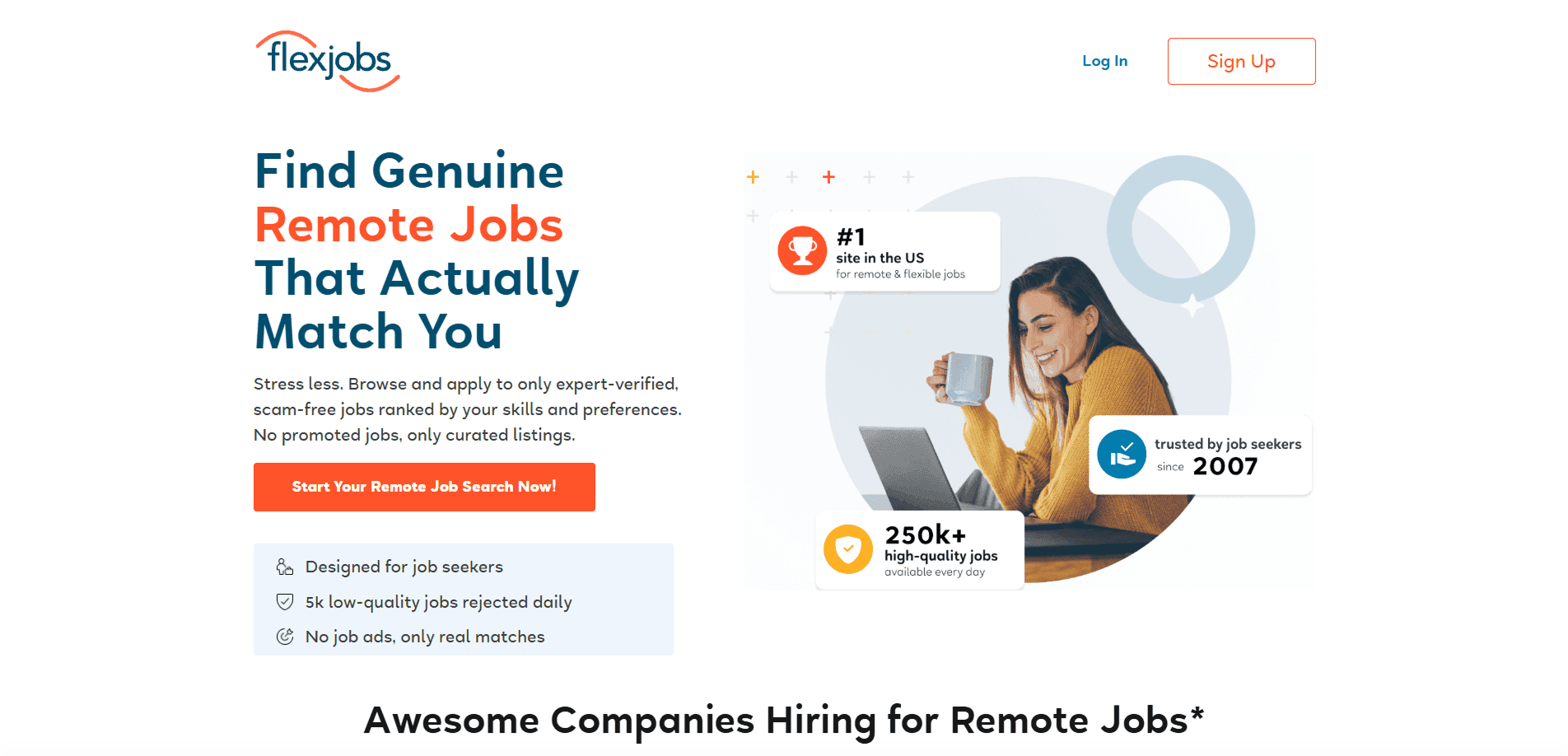
#5: FlexJobs — Best for Remote Work & Scam-Free
What it is: A paid job board ($5-25/month) that manually reviews every listing before posting. 50+ remote + flexible job categories.
What Works Exceptionally Well
Curation. Every job on FlexJobs has been human-reviewed. No spam, no scams, no “work from home but required in-office,” no fake postings. This saves you 10+ hours of time-wasting per month.
Remote + flexible specialization. FlexJobs is the largest board for legitimate remote work, part-time roles, and flexible schedules. If your priority is remote work, FlexJobs > Indeed.
Low ghost-job rate. <5% because of human curation. Compare to LinkedIn (27%), Indeed (20%), ZipRecruiter (18%).
ExpertApply AI. Auto-fills applications with your profile info; saves 10-15 minutes per application.
Response rates. 24-30% median first response rate — highest of major boards — because employers on FlexJobs are serious about hiring.
What Falls Sharp
Paid model. $2.95 trial → $24.95/month default. Per Remote Job Assistant analysis, this auto-converts on day 14 without prominent pre-charge notification. ~475 of FlexJobs’s 6,536 Trustpilot reviews (7%) are 1-star complaints about unexpected billing.
Smaller job pool. FlexJobs focuses on quality over quantity. You’ll see 10-20 matching jobs/day, not 500. If your industry isn’t remote-friendly, selection is limited.
Writing/marketing/support bias. FlexJobs skews toward writing, customer service, marketing, admin, and education roles. Tech roles exist but are underrepresented.
Best For
Anyone serious about remote work. Writers, customer service, marketing, educators, and PAs willing to pay $60/year to eliminate fake jobs.
Bottom Line
FlexJobs is best if remote work is non-negotiable and you want zero scams. Pay the $60/year, get 50+ curated jobs per day, and apply without worry.
Use FlexJobs if: You only want remote work, you’re in writing/marketing/support/education, and you’re willing to pay to skip scam filtering.
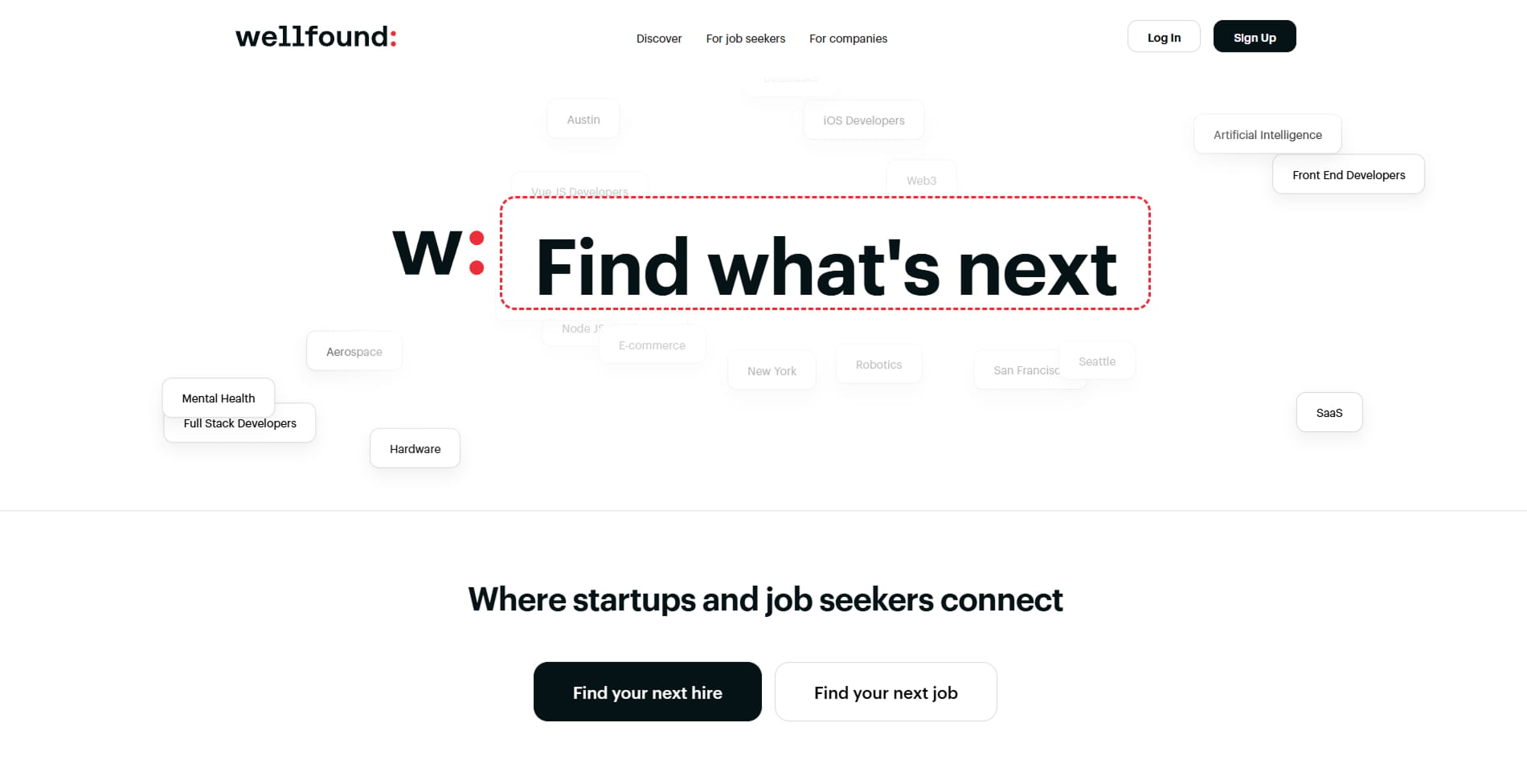
#6: Wellfound (AngelList Talent) — Best for Startups & Equity
What it is: A startup-native job board with 130K+ listings, 10M candidates, 35K companies. Emphasizes equity, direct-to-founder applications, and high-growth roles.
What Works Exceptionally Well
Equity transparency. Every startup listing shows salary + equity range. No hidden comp.
Direct application path. You can apply directly to founders + executives, not just recruiting teams. This matters.
Startup-first culture. If you want to join an early-stage company, Wellfound is where serious startups recruit.
Orion AI Copilot (launched 2025). AI Job Match, AI Resume Builder, and Salary Calculator built into the platform.
What Falls Sharp
Low response rates. 6-8% median first response. Per Scale.jobs analysis, ~80% of Wellfound applications expire without employer review; only 5-6% reach interview.
High variance. You might get three interviews from five applications at Series A startups. Or zero interviews from fifty applications at pre-seed companies. Depends entirely on the company’s stage and founder bandwidth.
No mobile app. Android removed March 2024; no iOS app. Platform works better on desktop.
Startup risk. Joining a startup is higher-risk than a public company. Many startups fail within 2 years.
Best For
Engineers, designers, PMs, growth marketers targeting venture-backed startups and remote-first companies.
Bottom Line
Wellfound is best if you want startup equity, are comfortable with ambiguity, and value high growth + learning over stability. Response rates are lower, but the opportunities are genuinely differentiated.
Use Wellfound if: You’re a tech professional, want to join a startup, are interested in equity upside, and can tolerate higher risk.
#7: Glassdoor — Best for Research, Now Inside Indeed
What it is: Company reviews, salary data, interview questions, and culture insights. As of July 2025, operationally integrated into Indeed (Recruit Holdings owns both). Glassdoor’s job posting functionality now routes through Indeed.
What Works Exceptionally Well
Company research. The best pre-interview intelligence on culture, salary, leadership, benefits, and interview questions. 50,000+ company profiles.
Salary transparency. Crowdsourced salary data by role, level, location, and years of experience.
Interview preparation. Actual questions people got asked in interviews at each company.
Employee reviews (anonymous). Unfiltered feedback from current and former employees.
What Falls Sharp
Not a job board anymore. If you want to apply, you’re routed to Indeed. Glassdoor is now purely a research tool.
Review quality variance. Disgruntled ex-employees can skew reviews negative. Satisfied employees rarely post. Data is directional, not definitive.
Trust erosion. After the Recruit Holdings restructuring and 1,300 job cuts (July 2025), some trust eroded.
Best For
Pre-application research. Anyone deciding whether to apply to a company.
Bottom Line
Use Glassdoor before you apply, not as an application platform. It’s a research tool now.
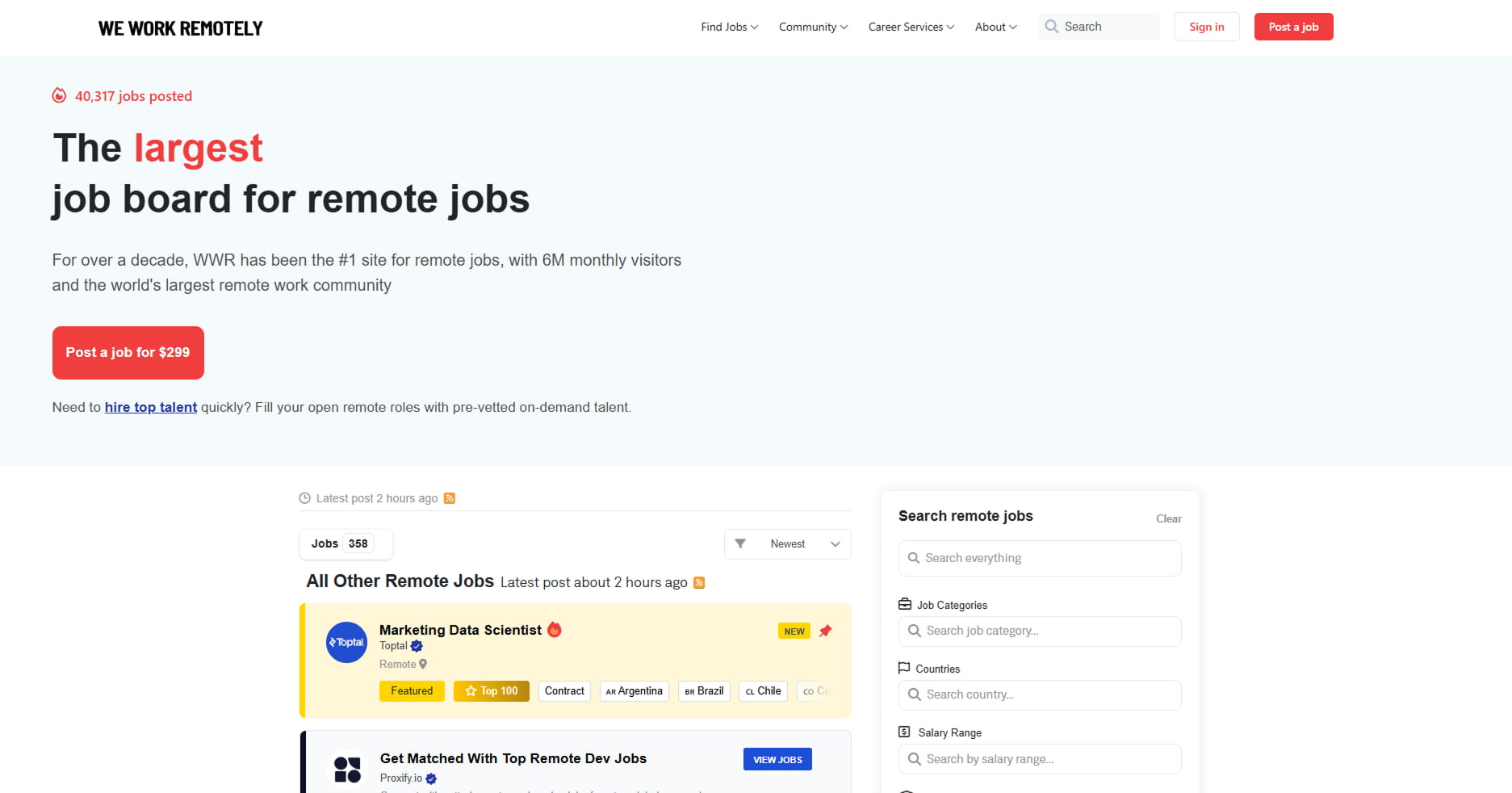
#8: We Work Remotely — Best for Remote-First Companies
What it is: A remote-focused job board with 4.5M monthly visitors, 152K+ curated remote jobs, and a focus on established remote-first companies.
What Works Exceptionally Well
Remote specialization. If you want remote work, We Work Remotely has more legitimate options than any board except FlexJobs.
Company-first filter. You can filter by remote-first companies (not “remote-optional”), which signals real remote culture.
AI Job Copilot (Pro plan $14.95/month). Personalized recommendations and application tracking.
Fast responses. 18-24% first response rate — solid and better than LinkedIn.
What Falls Sharp
Smaller pool than Indeed. If your role isn’t “remote-first,” selection is limited.
Less brand recognition among employers. Some companies post to Indeed/LinkedIn but not We Work Remotely.
Best For
Developers, designers, marketers, and customer support seeking remote-first companies at established firms (not startups).
Bottom Line
We Work Remotely is best if you want remote work and prefer established companies over startups. It’s the “serious remote” alternative to FlexJobs.
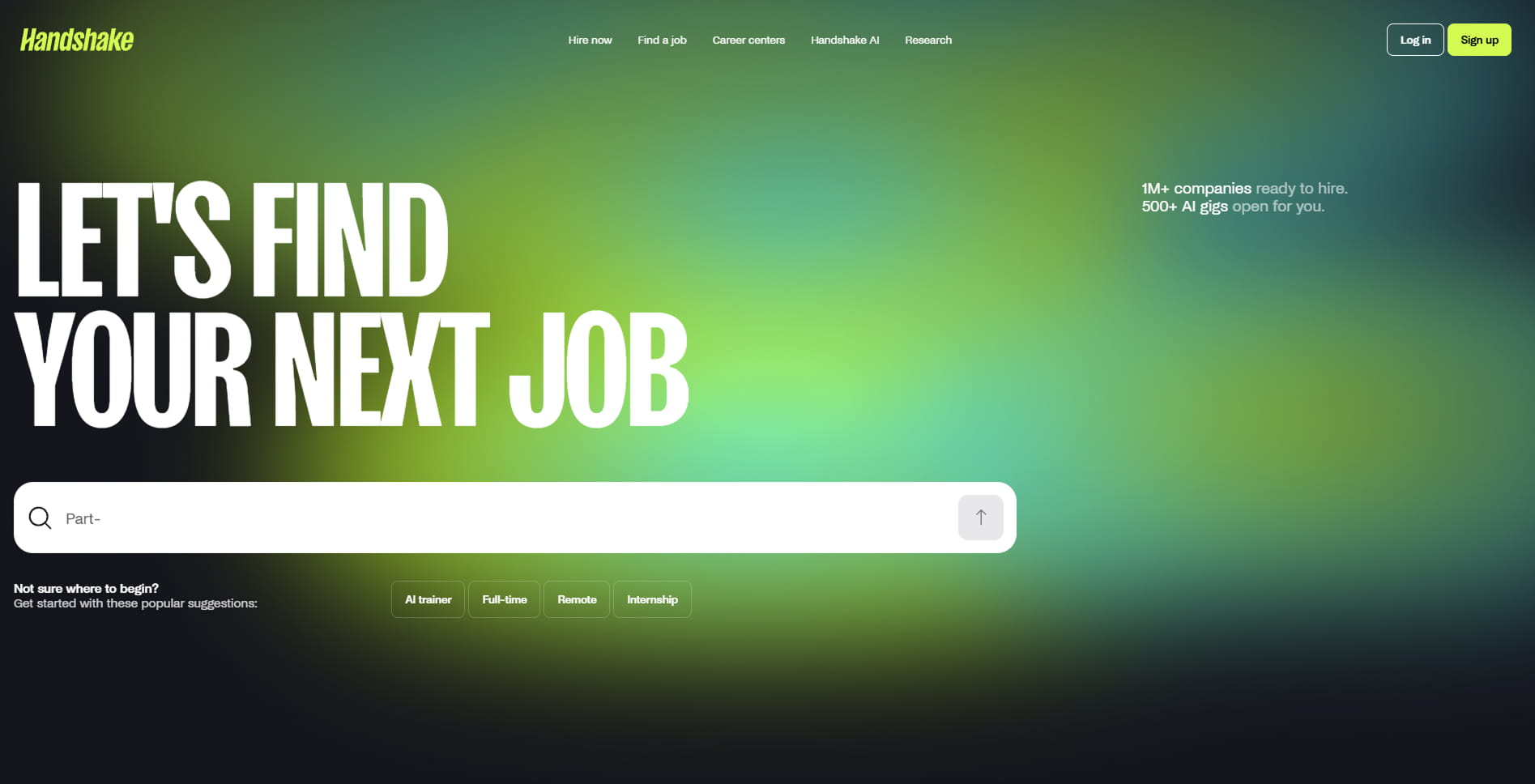
#9: Handshake — Best for Students & Recent Grads
What it is: A platform where 1,400+ colleges connect 20M students and alumni with 750K+ employers. Free for students; employers pay.
What Works Exceptionally Well
Direct employer-to-student recruiting. Employers come to Handshake specifically to hire students and recent grads, not general job seekers. This is the opposite dynamic of Indeed/LinkedIn.
College integration. Your school’s career office uses Handshake. Your peers are on it. It’s part of campus infrastructure.
High response rate. 25-35% first response rate because employers on Handshake are actively recruiting entry-level talent.
Low ghost-job rate. <8% because employers are actively managing their campus recruiting pipeline.
What Falls Sharp
Only for students and recent grads (within ~1 year of graduation for most employers).
Smaller employer pool outside campus recruiting.
Best For
Current students and recent grads (<2 years post-graduation) looking for entry-level, internship, or early-career roles.
Bottom Line
If you’re a student or recent grad, Handshake is essential. Start here before Indeed.
#10: Dice — Best for IT/Tech Contractors
What it is: A specialized tech job board. Heavy recruiter/staffing-agency presence. 12-16% of tech job seekers use it.
What Works Exceptionally Well
Tech specialization. Dice only has IT, software development, cybersecurity, data science, DevOps roles. No noise.
Recruiter attention. Staffing agencies actively recruit on Dice.
Contract + permanent roles. Dice supports both; many tech roles are contract-to-hire.
What Falls Sharp
Lowest interview rate. Huntr’s 2026 analysis of 600K+ applications found Dice had a 0.24% interview rate — the lowest of all major boards. Why? Heavy recruiter spam, outdated UX, and misalignment between postings and actual hiring.
Outdated platform. The UI hasn’t substantially changed in 10+ years.
Best For
IT contractors, senior software developers, DevOps engineers, cybersecurity professionals comfortable with recruiter outreach.
Bottom Line
Use Dice as a supplementary tool, not primary. It’s best for putting your profile in front of recruiters (passive inbound), not for active applications.
Why Click Hired Wins (Even Though You Need Both)
Here’s the honest truth: none of the major job boards fully solve job search in 2026.
LinkedIn has your network but charges money for premium features.
Indeed reaches the most employers but 20% of listings are ghosts.
ZipRecruiter offers speed but low match quality.
FlexJobs is scam-free but charges money and limits to remote.
Wellfound has great companies but 80% of applications get ignored.
We Work Remotely and Handshake solve specific niches (remote, students).
The problem they all share: You upload your resume once, then tailor nothing. You apply with a generic cover letter, or no cover letter at all. You send 50 applications and get 3 callbacks. And you waste 5-10 hours per week applying to ghost jobs.
Click Hired solves this because it’s not a job board—it’s an application accelerator.
You don’t leave Indeed, LinkedIn, ZipRecruiter, or FlexJobs. You use Click Hired alongside them.
Here’s how the workflow changes:
Old Workflow | New Workflow with Click Hired |
|---|---|
1. Browse Indeed (find 5 jobs) | 1. Click Hired syncs all 5 job boards |
2. Find one interesting job | 2. Click Hired surfaces 10-20 matching jobs |
3. Copy/paste your resume fields | 3. Upload resume once |
4. Write a generic cover letter (20 min) | 4. Click Hired generates tailored cover letter (30 sec) |
5. Apply on Indeed | 5. Apply with verified listing + custom letter |
6. Repeat 50 times = 50 hours | 6. Repeat 50 times = 5 hours |
Outcome: 3 interviews, exhausted | Outcome: 10-15 interviews, energized |
The time savings compound. The match quality improves. And you’re not wasting effort on jobs that were filled three months ago.
How to Actually Use Job Search Platforms (The Strategy)
Step 1: Pick Your Primary Platform (Based on Your Situation)
If networking is your strength: LinkedIn (focus on recruiter inbound)
If you need volume and speed: Indeed (but filter heavily)
If you only want remote work: FlexJobs (pay the $60/year)
If you’re in tech/startups: Wellfound + LinkedIn (equity + networks)
If you’re entry-level/hourly: Indeed + ZipRecruiter (high volume)
If you’re a student: Handshake (primary) + LinkedIn (secondary)
If you’re IT/contractor: Dice (passive) + LinkedIn (active)
Step 2: Add Click Hired as Your Acceleration Layer
Upload your resume to Click Hired. Let it aggregate jobs from your primary platforms (+ others). Review 10-20 matching jobs daily instead of 100 noise jobs. Apply with tailored letters instead of generic ones.
Step 3: Use Glassdoor Before You Apply
Before submitting an application, research the company on Glassdoor. Read 5 recent reviews. Check the interview questions. See the actual salary data. This takes 5 minutes and prevents wasted applications.
Step 4: Batch Your Applications
Don’t apply to random jobs throughout the day. Batch 10-15 applications in one sitting. It’s more efficient, and recruiters see application patterns. Apply Tuesday-Thursday mornings (when recruiters are most active).
Step 5: Track Metrics
Applications sent per week
First response rate (% of applications that get a callback within 7 days)
Interview-to-application ratio
Offer rate
If your callback rate is <15%, something’s wrong with your applications. If your interview-to-offer ratio is <30%, something’s wrong with your interview skills. Track these metrics so you know which to fix.
Alternative Recommendations (By Situation)
For remote work: FlexJobs (primary) + We Work Remotely (secondary) + Click Hired (accelerator)
For startup equity: Wellfound (primary) + LinkedIn (secondary) + Click Hired (accelerator)
For high-volume hourly work: Indeed (primary) + ZipRecruiter (secondary) + Click Hired (accelerator)
For networking-driven roles (sales, business dev): LinkedIn (primary) + Click Hired (accelerator) + industry-specific boards (secondary)
For IT contractors: Dice (passive inbound) + LinkedIn (active search) + Click Hired (accelerator)
For students/recent grads: Handshake (primary) + Indeed (secondary) + Click Hired (accelerator)
FAQ
Should I use all job boards at once?
No. Pick one primary board where most jobs in your field are posted. Use 1-2 supplementary boards. Use Click Hired to aggregate + accelerate across all of them.
Why do some employers not respond?
Three reasons: (1) The job is a ghost posting (18-22% of listings). (2) Your application didn’t match the required keywords (rare if you’re using Click Hired). (3) You’re overqualified or underqualified (Click Hired filters for 70%+ match).
Is LinkedIn or Indeed better?
LinkedIn is better if you have a strong network or you’re mid-career. Indeed is better if you’re entry-level or in high-volume industries. Use Click Hired to apply to both simultaneously.
Should I pay for LinkedIn Premium?
Only if you want recruiter search tools or advanced search filters. Most job search success comes from a strong profile, not Premium features. If you’re serious about LinkedIn, invest in a professional headshot instead.
Is FlexJobs worth the cost?
Yes, if you only want remote work. If you’re open to on-site or hybrid, use Indeed/LinkedIn and filter for remote yourself. You’ll find free options.
Why do I keep getting rejected?
Most likely: (1) Your resume is generic (Click Hired synergy helps here). (2) Your cover letter doesn’t match the job (Click Hired solves this). (3) You’re applying to the wrong jobs (Click Hired’s job matching filters this). (4) You need interview prep (Click Hired can’t help here, but mock interviews can).
What’s the best job board for [specific industry]?
Tech/startups: Wellfound + LinkedIn. Healthcare: Indeed + ZipRecruiter. Finance: LinkedIn + Indeed. Non-profit: Indeed + idealist.org. Government: USAJobs. Contracting/temp: FlexJobs or staffing agencies. Use Click Hired to aggregate.
How many jobs should I apply to per week?
10-15 targeted applications (using Click Hired) beat 50 shotgun applications. Quality over quantity.
How long does it take to hear back?
Median first response: 3-7 days. If you haven’t heard back after 10 days, follow up. If no response after 20 days, move on.
The Real Talk
Job search in 2026 is harder than it was in 2020. Ghost jobs are real. Applicant spam is real. And wasting 45 minutes per application on a job that’s already filled is real.
But the tools have also improved. AI matching is better. Salary transparency is standard. And platforms like Click Hired exist specifically to solve the problem of wasted effort.
The best job board isn’t the one with the most listings. It’s the one that gets you an interview fast, with applications that actually get read.
Ready to Apply Better?
Stop wasting time on job boards alone. Use Click Hired to aggregate the best opportunities, filter out ghost jobs, and apply with tailored, resume-synced applications.
You’ll apply in half the time. You’ll get more callbacks. And you’ll land a better job.
7-day free trial.
Last updated: May 2026

CLICK HIRED · YOUR NEXT MOVE
Turn that job link into a tailored resume and cover letter with Click Hired. Built from your experience. Ready for your review.
7-day free trial